
Turntable
Realtime Viewer


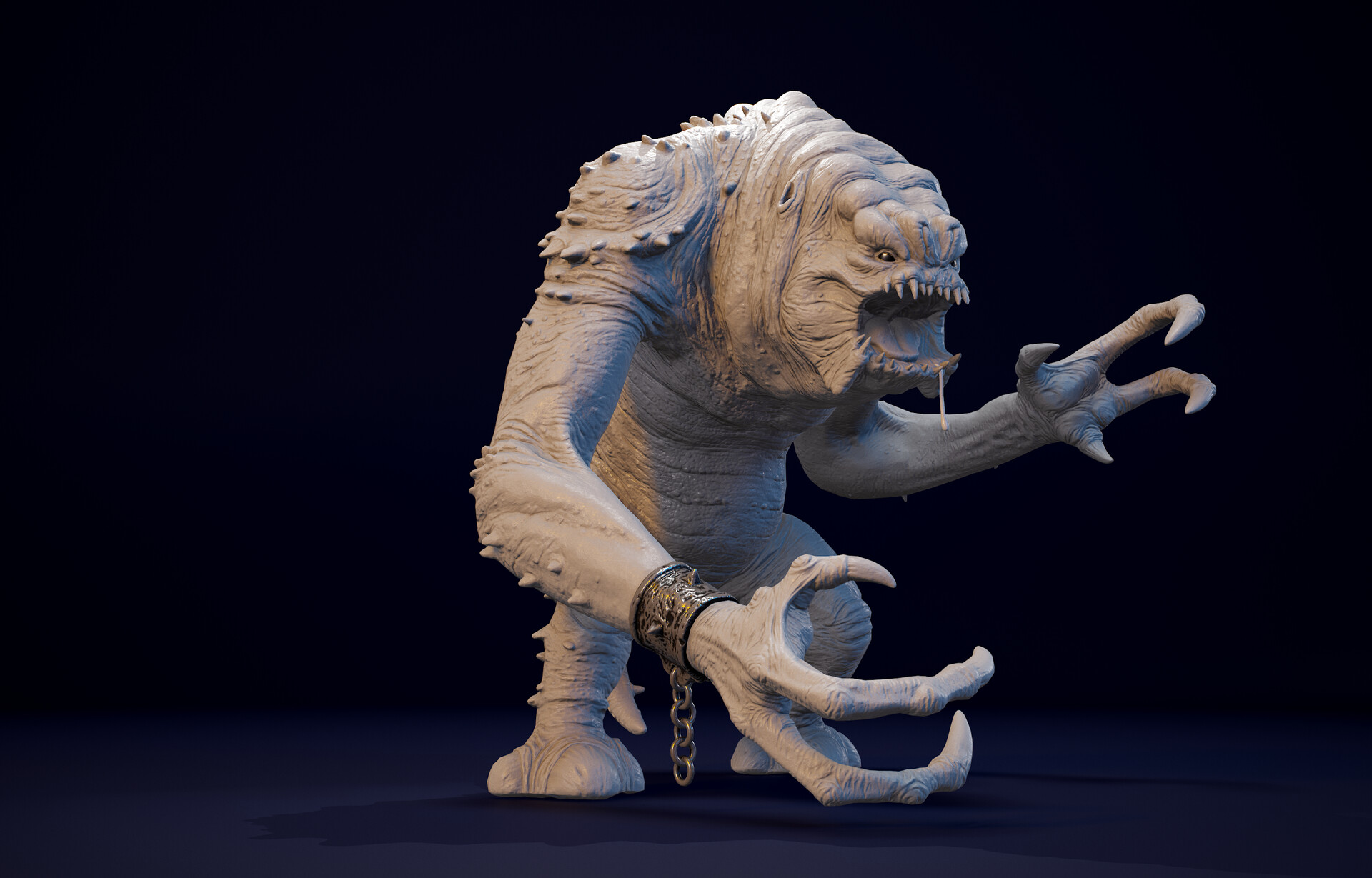


Typical level of detail and quality from the raw scan results.

Raw scan detail.

From model kit to 3d asset.
Scanned in Reality Capture.
I did a full photogrammetry pipeline study with a 1998 AMT/ERTL Rancor vinyl model kit.
Each piece of the kit was processed individually via a 24mpx DSLR, Tripod and lighting setup.
Anywhere from 300-600 photos were taken with 3-6 rows around the object.
Over 2200 photos total.
They were then processed from Raw to Tiff, De-lighted, and corrected in Lightroom.
Then processed in Reality Capture. I also took a proxy scan of the overall set of parts so I could establish consistent scale.
The next step was to clean up each part. While the results were very clean to begin with, it took a lot of time to clean up the surface area of some areas that were noisy. After this I had the painstaking task of scaling all the parts correctly, laying them out and making all the joins look seamless. This was by far the most time-consuming task as I also had to address optimization as I was working.
The body alone was scanned in 2 parts and this was already 44million poly's in ZB.
It was at this point I had to start to introduce decimation into the workflow when necessary.
Along with reprojection onto low poly versions to make working with them easier.
At the end, the final zbrush polycount in the working file is 190 million.
The retopology was a challenge to keep clean including all the spikes.
The end result is rendered in Marmoset Toolbag.
I modeled the chain, drool, and earing to reflect the original studio scale model from the film.